Staying Curious Through Change in Privacy and Compliance with Cara Mowen (Ep. 24)


Key Takeaways
- Cara Mowen's career journey spans litigation and leading privacy programs at prominent B2C and B2B organizations like Sears, Kmart, Shutterfly, CDW, and Aon.
- Privacy and compliance work is fundamentally about organizational change, requiring professionals to understand human motivations and build strong internal relationships.
- Practicing the "pay yourself first" mindset means setting aside dedicated time to stay current, maintain curiosity, and invest in your own career development.
- Even as agentic AI takes on more tasks, human oversight and stakeholder mapping remain critical to ensure systems accomplish their intended goals.
- Developing soft skills like executive presence, active listening, and the ability to code switch across different departments is essential for long-term success.
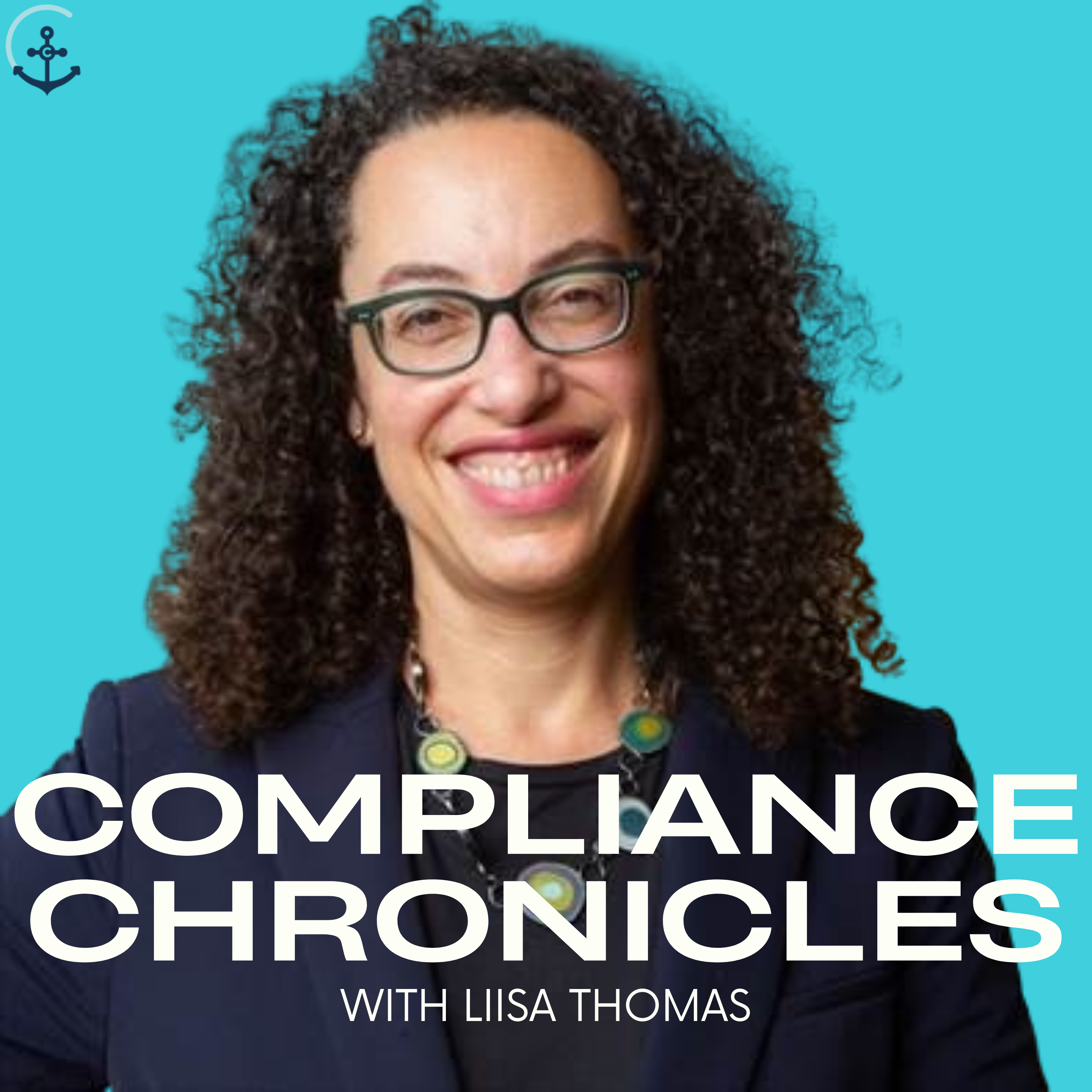
In this episode of Compliance Chronicles, Liisa Thomas talks with her Northwestern co-professor Cara Mowen, Global Cyber Counsel and Americas Head of Privacy Advice at Aon. Cara shares how a path from litigation to leading privacy at Sears, Kmart, Shutterfly, CDW, and Aon was driven by her curiosity about data, technology, and who owns data.
The conversation explores why the human factors matter most in privacy and compliance work, from stakeholder alignment to building trust across the company. Cara also looks at how AI agents change, and don't change, that picture.
This episode covers:
- The challenge of stakeholder alignment and engagement, from senior leaders to individual contributors
- Why privacy and compliance work is really about organizational change and people's motivations
- Building relationships, especially with those who hold influence inside a company
- The "pay yourself first" mindset: setting aside time to stay current and curious
- Why stakeholder mapping still matters as agentic AI takes on more tasks, and why human oversight of AI agents is essential
- The importance of staying flexible and building soft skills such as executive presence, and getting honest feedback
If you enjoyed this episode of Compliance Chronicles, please consider subscribing and leaving a rating or review. Follow the show on your favorite podcast platform (Spotify, Apple Podcasts, YouTube and more) and connect with Liisa on LinkedIn so you don't miss future episodes.
Frequently Asked Questions
Who is Cara Mowen?
Cara Mowen is the Global Cyber Counsel and Americas Head of Privacy Advice at Aon, as well as an adjunct professor at Northwestern Law School.
What are the biggest challenges in privacy and compliance?
Key challenges include securing stakeholder alignment, engaging senior management and individual contributors, and managing organizational change in fast-paced environments.
How will agentic AI impact privacy and compliance roles?
While agentic AI automates certain tasks, the human element remains vital; professionals must still map stakeholders, understand motivations, and maintain rigorous oversight of AI systems.
What is the "pay yourself first" mindset in compliance careers?
It is the practice of treating your own career development as a priority by setting aside time to stay up-to-date, curious, and connected with peers.
Cara Mowen: Mm.
Liisa Thomas: Welcome to Compliance Chronicles, where we learn from professionals shaping the world of compliance. I'm your host, Liisa Thomas, Outside Privacy and Compliance counsel an adjunct professor at Northwestern Law School, and a lifelong learner of organizational change. From personal journeys to hard-earned lessons, these are the Chronicles that inspire and guide. Let's dive in. Welcome back to another episode of Compliance Chronicles, where I am delighted to be joined by my co-professor at Northwestern, Cara Mowen. So Cara, I'm gonna turn it over to you to introduce yourself and tell us a little bit about what you do right now.
Cara Mowen: Yeah, thank you, Liisa. Really am glad to be here. I am with Aon Corporation and I am the Global Cyber counsel and America's head of privacy advice for Aon. in that role, I manage our global cyber legal program, and I also am responsible for our privacy advice for North America, Central America, and Latin America.
Liisa Thomas: So tell us how you got to this role at Aon. What was your journey that got you here?
Cara Mowen: My journey to get here was long and varied. I started out my career in law as a litigator. it was a lot less fun to come in on the back end of things when things had already gone wrong. I've always been really interested in technology and and data and some very nerdy kinds of philosophy type questions about. Data as property and who owns data, does the individual can companies truly own someone's data? I'm a bit of a philosophy nerd, so when somebody mentioned, isn't privacy something that's gonna be up and coming, it was just an immediate yes, absolutely, that's the right thing for me to do. I got more experience until I was able to go in-house and and since then, which was a little over a decade ago, I've been leading privacy at different organizations, so both both B2C type organizations like Sears K Mart Shutterfly and also B2B organizations like CDW and Aon. So it's been a long journey, but a very, very interesting one.
Liisa Thomas: What are the challenges that you've faced along the way? and how have you overcome those challenges?
Cara Mowen: There are a lot of different types of challenges. and some of them I think are just about any sort of in-house job, really. I'm working at different types of companies, and some of them I think are more particular to privacy, which has become a much more, strategic and important field. But but when I got into it, we were still very much convincing people in management that this was a true need. That's still something that can be a challenge, is where that stakeholder alignment and engagement, both senior management but also individual contributors. when the senior leadership has been very both on board with it and there's clear structures and ownership, then that feels like smooth sailing and and quite easy. when you don't have one of those things, then it's much more challenging just from an organizational change perspective.
Liisa Thomas: What are some of the things that you've learned as you've worked to overcome those challenges? Lessons that you can share with us.
Cara Mowen: pay yourself first mindset. I think of it in this career as treat your own career first in that set aside that time to stay up to date. I'm a naturally very curious person. I find all of this quite interesting and staying curious about those things, even if they're not necessarily directly related to what you're doing today or tomorrow. I have a group of several different privacy people, you included, Liisa, who I'll periodically reach out and text something like, Hey, did you see this? Or we'll have get togethers and chat. I think for me in terms of how do I stay motivated to stay up to date is just remembering what kept me interested in the first place. a lot of these issues are they just are deeply interesting. talking some of these things out loud, whether with yourself or with somebody else keeps me engaged and interested in these things beyond just the day-to-day of what D SARS do we have to be doing and how quickly and what the process should be. The challenge with stakeholder alignment and engagement is building as many relationships as you can within the company and talking to people, but really understanding who within the company really has that influence. And sometimes it's the people that you would think that it is and sometimes it's not, Even I've done a lot of remote work and making sure to get in person, as often as I can with people and having those coffees and and chatting with people and and just getting to know them so that when they trust you. And they they feel like they really can come to you when they have an issue or they want to talk something out and they'll listen to you as well. it all comes down to the people at the end of the day. Every company, every business is just made up of people who are doing processes, people who are doing things. And most of what we're trying to accomplish in privacy and compliance is shifting the things that people are doing and the way that they're doing them. And so if you're not really thinking about the people and their motivations for the status quo, their motivations for changing, what it is that they're really hoping to accomplish, both personally and professionally and for the company. Understanding those motivations when you go into the room and the different players and and the people who will be vocal and less vocal, all the human factors are the most important factors.
Liisa Thomas: You said that companies are made up of people. Do you think that's gonna change when we have more tasks done by agentic AI? will we still have the same level of focus on stakeholder mapping, onboarding, identifying the powerful stakeholders? Now we also need to think about systems and are the systems accomplishing what we set out for them to accomplish.
Cara Mowen: That is an excellent question. I don't think it's actually that different from today. today we have companies made up of people, but they also have tons of process, whether or not that's done by a gentic AI or not. The system already exists. And so whether the system is individual people who are pushing buttons or making widgets, or the system is agentic AI that's been programmed to push buttons or or make the widgets. I think it's gonna come down to the same thing, which is understanding the the stakeholders in the company and what their motivations are. It might be a little bit harder because there will probably be a little bit more entrenchment in the system. And people already psychologically tend to have a bias towards well, computer says something that it must be more correct than a human. And if we don't have people controlling and doing QA and making sure that they really are in control of the AI agents, then it's gonna get out of control really quickly. So trying to make sure that that's being built in, that oversight is being built in and that people have ownership of the oversight and responsibility for the oversight of agents.
Liisa Thomas: Any parting advice that you could share with someone either who's just starting out in their journey as a privacy professional, as a compliance professional, or someone who's been doing this for a long time and is looking for a little boost, a little motivation, a little bit of encouragement.
Cara Mowen: I think the first thing is things will always change. The law, your organization, your life. you'll feel like you have a handle on things, and then your really supportive boss will leave the company, or Europe will completely upend the space, or somebody in your life will get, an illness and you'll and you'll have to to shift how you're doing things. understand that things will change, your job will change, the space will change, and stay flexible and willing to pivot. there'll be seasons in your life and in your career. Maybe you're really hard charging and working longer hours. I guess this is both for if you're new to this area, but also if if you've been in here for quite a while. make soft skill development a key part of your development. Don't you know we've been talking about so much of this job is organizational change and encouraging change and figuring out how to do change and the soft skill development of executive presence and being able to present really clearly and effectively, being able to learn the business and speak the business's language and develop that rapport and code switch. when you're talking to different people, when you're talking to your colleagues in in legal or compliance or, information security, being able to code switch your language to what most concerns them and how they understand people speaking, try to get honest feedback from your peers, from your boss, from other people about how would you say that I do about communicating difficult concepts to people? How would you say that that I do as a manager? how would you say I do at executive presence and then work really carefully and clearly on those skills Don't get so caught up in your day-to-day work that you don't make sure that you're taking that time for yourself and your development. It's critical, it's needed. You should treat it as part of the job. And stay curious. Stay curious.
Liisa Thomas: Curious. All right, Cara, thank you for making the time to have this conversation. I hope you enjoyed this episode of Compliance Chronicles, where we get guidance and inspiration from the personal journeys of leaders in the profession. If you did, I'd love it if you'd consider subscribing or leaving a rating or review. It helps others discover the show.